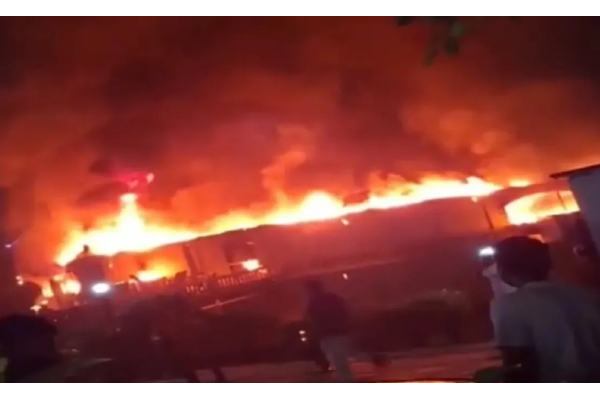

























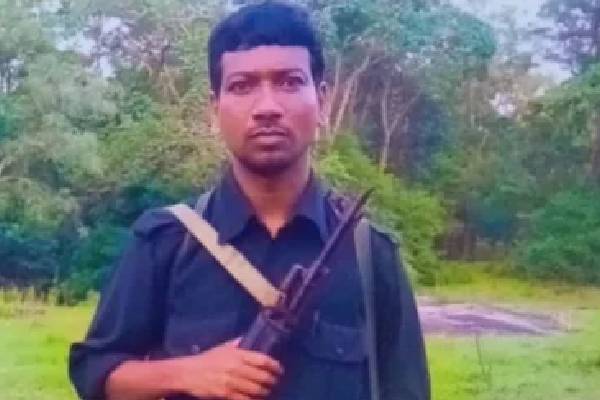
Madvi Hidma, one of India’s most feared Maoist commanders, was killed early Tuesday morning in a high-intensity encounter in the dense forest region of Maredumalli in Andhra Pradesh. His wife and core team members were also eliminated in the operation. Intelligence ADG Mahesh Chandra Ladda officially confirmed the encounter in a press briefing, calling it a decisive breakthrough in the long fight against Left-Wing Extremism.
Who Was Madvi Hidma?
Hidma was widely known as the most dangerous Maoist commander operating in the Dandakaranya forests. He was only 43, yet held enormous influence within the Maoist structure. Born in Puvarthi village in Sukma district of Chhattisgarh, he belonged to the Muria tribe and grew up amid the conflict zone that shaped his militant career. He was also a rare polyglot. His fluency in Hindi, Telugu, Gondi, Bengali and Koya helped him mobilise cadres across state borders without dependency on intermediaries.
To the Maoist rank and file, he was a symbol of resistance. To security forces, he was the mastermind behind some of the deadliest ambushes of the last two decades.
Why His Death Matters
For years, Hidma remained the central figure behind major attacks in the Red Corridor. His guerrilla skills, deep knowledge of the terrain, and ability to strike and vanish made him almost impossible to track.
His elimination marks a major shift in the anti-Naxal campaign. Security agencies believe that Maoist operations in the Bastar and Andhra–Chhattisgarh border regions may collapse without his strategic leadership.
The Man Behind the Deadliest Maoist Strikes
Hidma is believed to have planned or led at least 26 major attacks. Among them:
Dantewada 2010: 76 CRPF men killed
Jhiram Valley 2013: 27 people killed, including top Congress leaders
Sukma-Bijapur 2021: 22 security personnel killed
Each of these attacks exposed serious tactical weaknesses in security forces. Hidma exploited gaps with stunning precision and led lightning strikes that became textbook guerrilla operations in Maoist circles.
His Rise Inside the Maoist Hierarchy
Hidma’s rise was rapid and unusual. He headed the 1st Battalion of the People’s Liberation Guerrilla Army (PLGA), the most lethal strike unit of the Maoists. He later became the youngest member of the CPI (Maoist) Central Committee, the organisation’s highest decision-making body. He was also the only tribal from Bastar to reach this position. His understanding of the Dandakaranya region was unmatched. He knew the hills, rivers and escape tracks like the back of his hand, often slipping through multi-state cordons that relied heavily on technology.
How Operation Black Forest Unfolded
The encounter took place deep inside Maredumilli in the Alluri Sitarama Raju district. The region lies near the tri-junction of Andhra Pradesh, Chhattisgarh and Telangana, an area filled with Maoist hideouts.
Security teams launched the strike after receiving precise intelligence on Hidma’s movement. The operation involved elite anti-Maoist units backed by local intelligence teams.
Six bodies were recovered after the exchange of fire, including:
Madvi Hidma
Raje (Rajakka) – his wife, who also carried a ₹50 lakh reward
Chelluri Narayana alias Suresh
Tech Shankar
The search operation is still underway in the surrounding forest areas.
A Turning Point in the Anti-Maoist Campaign
Union Home Minister Amit Shah, who had set a deadline to neutralise Hidma by November 30, congratulated the forces for completing the mission ahead of time. Shah has previously declared that the government aims to make India “Maoist-free by March 31, 2026.” With Hidma gone, security agencies believe a major pillar of the Maoist insurgency has collapsed.
A Mother’s Last Appeal
Hidma’s death came just days after his mother, Madvi Punji, made an emotional public appeal urging him to surrender and abandon the armed struggle. She believed rehabilitation and a peaceful life were still possible for her son. That appeal now stands as a tragic final message before his violent end.
The Road Ahead
While the Maoist movement has been steadily weakening, Hidma’s death is one of the most significant setbacks for the insurgency in years. His absence leaves a leadership vacuum that may be difficult for the organisation to fill. As agencies continue sweeping operations across the tri-state forests, the success of Operation Black Forest may mark the beginning of the end of Maoist dominance in Dandakaranya.